
The camera work has moved forward
Earlier foundations used an over-the-shoulder third-person probe. The newer development records include a native first-person setup and first-person focus HUD. The website now separates that history from the current integration direction instead of continuing to describe the earlier camera as the final game. The production first-district setup still needs its complete scene handoff.
One focus, one reason to interact
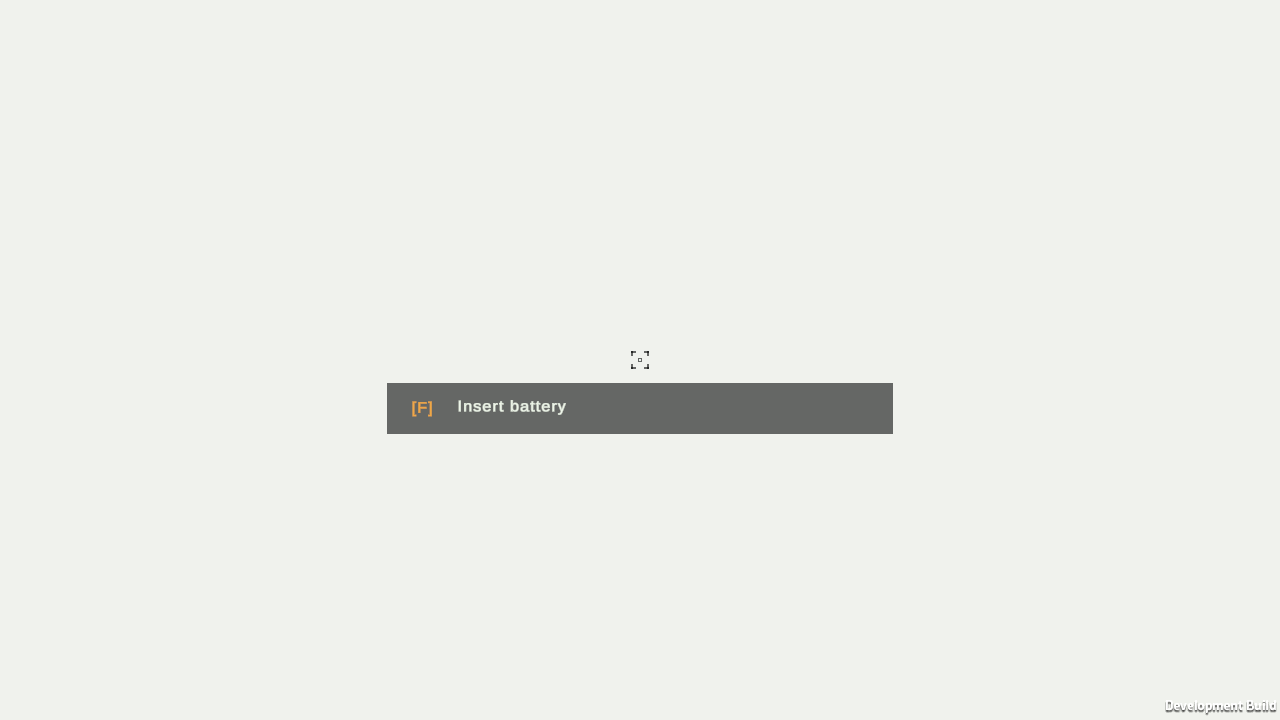
The first-person HUD presents a centred reticle, the current interaction binding and an optional blocked reason. Menus, reading, conversations, death and blocked gameplay suppress the focus display. A fresh snapshot is required on return. The interface displays the game’s decision; it does not invent a second line-of-sight or interaction rule.
Readability in two languages
English and German UI captures cover inventory and loot states, narrative displays, crafting requirements, journal, rest summaries and the first-person HUD. A blocked-focus contrast issue was found visually, corrected and retested against light, mid and dark backgrounds. These isolated UI tests do not prove the complete live provider and camera integration.
Mara reaches you while you can move
The current opening decision is a short radio call with subtitles and optional tutorial hints, not a locked opening cutscene. A protected handheld radio belongs to the starting equipment and later carries Nila and Deniz’s calls. The spawn call guides the player to Mara; the personal briefing remains a separate story step.
The first playable journey is still a milestone
Recent isolated native suites cover quests, crafting, effects, loot, reading and region gating, with documented passing checks. Content import, the production player stack, death/respawn, automatic disk saving and cell migration still need the full first-district loop. A working fixture is evidence for a part of that loop, not the whole game.